How to Choose a Fintech App Development Company (2026 Guide)

A founder once sent me a fintech MVP to review before their seed round. The app looked superb — clean onboarding, a beautiful balance screen, a wallet that felt like it belonged on a billboard. Then I opened the database.
There was no ledger. Balances were stored as a single balance column on the user row, updated with a plain UPDATE statement after each transaction. No double-entry. No idempotency keys, so a retried request could pay someone twice. No immutable audit trail, so when two users disagreed about a transfer there was no way to prove who was right. The build had cost real money and nine months, and the part that actually made it a financial product — the part a regulator, an auditor or an acquirer would look at first — hadn't been built at all.
That is the single most expensive pattern in this industry, and it's nearly invisible from the outside. A fintech app is not an app that happens to move money. It's a money system that happens to have an app on top of it. Companies that understand that sentence build differently from day one. Companies that don't build you something that demos beautifully and cannot be trusted with a rupee.
This guide is about telling the two apart before you sign. It covers what a fintech app development company actually has to do, the failure modes that kill these builds, what compliance and security really require, what it costs in 2026, how long it takes, and a scorecard you can take into any sales call. I've been building business-critical software — billing, inventory, ledgers, invoicing, multi-tenant SaaS — since 2018, and the patterns below come from that work rather than from a brochure.
At a glance
- The app is maybe 30% of the work. The ledger, reconciliation, compliance, security and operations tooling are the other 70%, and they're where budgets are won or lost.
- Double-entry accounting and idempotency are non-negotiable. If a vendor can't explain both without hesitating, they have never shipped a real financial product.
- Regulation decides your architecture, not the other way round. Licensing, data localisation, KYC and settlement rules shape the build. Bring compliance in at week one, not week twenty.
- You almost certainly don't need a licence to start. Most products launch on a regulated partner's rails — a licensed bank, PA/PG, NBFC or PPI issuer — and that choice is the biggest architectural decision you will make.
- Realistic 2026 budgets: ₹9–25 lakh (
$11k–$30k) for a credible, production-grade fintech MVP; ₹25–60 lakh ($30k–$72k) for a full v1 with compliance and ops tooling; plus 15–25% of build cost annually to keep it alive. - Timelines: 12–20 weeks to MVP, 6–10 months to a hardened v1. Anyone promising a payments app in six weeks is quoting a prototype and calling it a product.
- Security is a design constraint, not a phase. Encryption, key management, tokenisation, least-privilege access and audit logs are cheap on day one and brutally expensive to retrofit.
- Ask for the boring artefacts: a data model, a threat model, a reconciliation plan, an incident runbook. Portfolios show screenshots; these show competence.
- Ownership is absolute. Code, repositories, cloud accounts, keys, app store listings — all in your company's name, from the first commit.
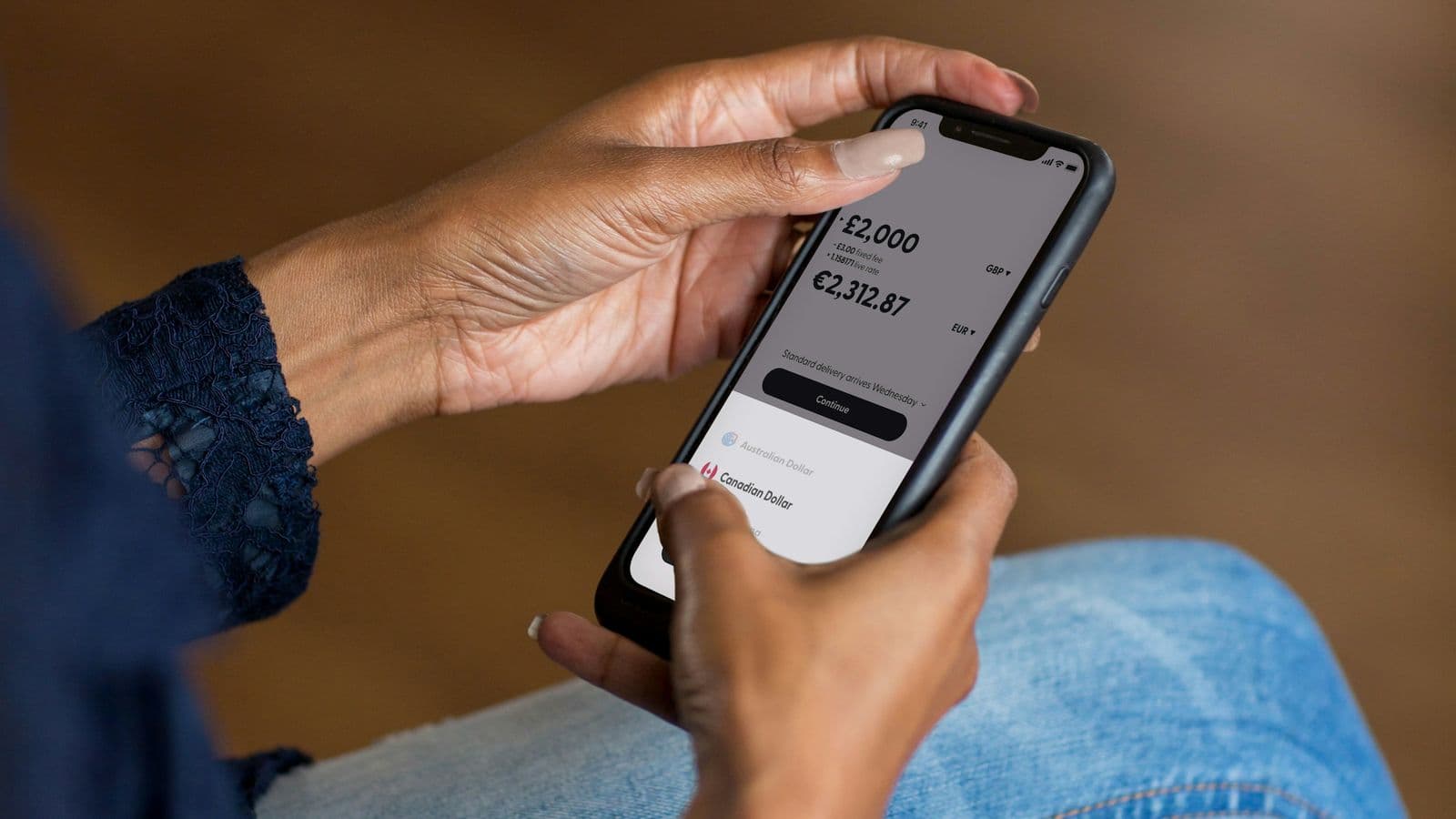 Hands on a phone showing an account balance — the surface of a fintech product is trust, and trust is an engineering property before it is a design one
What a fintech app development company actually does
Any competent mobile app development team can build screens, authentication and an API. A fintech app development company has to do that and own a second body of work that ordinary app teams never touch. That second list is what you're really buying:
- A correct money model — double-entry ledger, account hierarchies, holds and authorisations, settlement states, currency and rounding rules, immutable transaction history.
- Reconciliation — automated matching between your ledger and every external source of truth: the bank, the payment gateway, the card network, the partner NBFC. Daily, not quarterly.
- Idempotency and failure handling — every money-moving endpoint must be safe to retry. Networks time out mid-transaction; the question is whether that creates a duplicate payment or nothing at all.
- KYC and onboarding — identity verification, document capture, liveness, sanctions and PEP screening, re-KYC cycles, and a manual review queue for the cases that fail automation.
- Fraud and risk controls — velocity limits, device fingerprinting, anomaly detection, step-up authentication, and an ops console to freeze an account in seconds.
- Compliance engineering — consent capture, data retention and deletion, audit logs, regulatory reporting, and the ability to answer "what exactly happened to this customer's money on 14 March?" in under a minute.
- Operations tooling — the internal dashboards your support team lives in. Underbuilt every single time, and the first thing that breaks at a thousand users.
- Security posture — encryption at rest and in transit, secrets and key management, role-based access, penetration testing, dependency scanning, incident response.
If a proposal is a feature list of screens with no line item for any of the above, you are not looking at a fintech quote. You are looking at an app quote with a fintech logo on it.
The seven products people mean by "fintech app"
"Fintech" covers wildly different builds. Getting specific in the first conversation saves you months:
- Payments and wallets — collections, payouts, UPI, cards, QR, prepaid balances. Highest regulatory surface; deepest ledger requirements.
- Lending — origination, underwriting, disbursal, EMI collection, collections and recovery. Heavy on partner integrations, credit data and disclosure rules.
- Neobanking and account experiences — a modern interface over a partner bank's accounts and cards. The work is integration, reliability and support tooling.
- Wealth and investing — brokerage, mutual funds, SIPs, portfolio analytics. Market data, order routing and real-time correctness dominate.
- Insurtech — quoting, policy issuance, claims. Document-heavy workflows and underwriting logic more than transaction throughput.
- Loyalty, rewards and points — closed-loop value that behaves like money and therefore needs a real ledger, expiry rules and fraud controls. This is exactly the kind of platform I've built for clients in the finance and fintech space.
- B2B financial operations and embedded finance — invoicing, GST, credit ledgers, collections, spend management, or payments folded into a non-financial product. The fastest-growing category, and often the highest-margin one.
Most businesses that ask me for a "fintech app" are actually in category six or seven — they don't need a licence, they need a rigorous financial back end wrapped in a product people enjoy using. That is a very different scope and a very different price.
Why fintech builds fail
Five failure modes account for nearly everything I've seen go wrong. Every one is predictable, and every one is cheaper to avoid than to fix.
1. The ledger was an afterthought
Balances stored as mutable columns. Transactions recorded as a flat log with no debits and credits. No concept of pending versus settled. It works fine in a demo and collapses the first time a payment fails halfway, a refund is issued, or an auditor asks you to prove a balance from first principles. Rebuilding a ledger after you have live customer money is the most painful migration in software, because you cannot simply start again — you have to reconstruct history you never recorded.
2. Compliance arrived after the architecture
A team designs a clean product, then discovers that settlement must flow directly between the customer's account and a regulated entity's account, that card data can't be stored at all, that payment data has to live in India, or that a disclosure has to appear at a specific point in the flow. Each of those is a structural change, not a copy edit. Compliance discovered in month six reliably costs more than the entire MVP did.
3. Operations tooling was never scoped
The consumer app is polished; the internal admin is a Django-style table with no permissions. Then support needs to reverse a transaction, risk needs to freeze an account, finance needs a settlement report, and every one of those becomes an engineer running SQL in production — which is both an outage risk and an audit failure. Budget for the internal product. It is a product.
4. Nobody owned reconciliation
Your ledger says one thing, the gateway says another, the bank statement says a third. Without automated daily reconciliation and a defined break-investigation process, small discrepancies compound silently until someone notices a five-figure gap nobody can explain. This is the difference between a company that can raise a round and one that cannot.
5. The vendor optimised for the demo
Impressive animations, thin foundations. This happens because demos are what win contracts, so teams that sell hard build for the pitch. You counter it by asking about the unglamorous 70% in the first meeting and watching how fluent the answers are.
 Stacks of paper files — the regulatory reality behind a clean fintech interface, and the work that decides your architecture before a single screen is designed
Compliance: decide this before you design anything
I am a developer, not a lawyer, and nothing here is legal advice — rules change, and your specific product needs a compliance counsel. But you should walk into vendor conversations knowing the shape of the landscape, because the answers determine the build.
The first question is always: are you regulated, or are you riding someone else's licence? Most early-stage products launch on a partner's rails — a licensed bank, a payment aggregator, an NBFC, a prepaid instrument issuer, a broker. That partnership defines your APIs, your settlement timing, your onboarding flow and half your roadmap. Choose the partner before you choose the architecture, because the architecture follows from it.
In the Indian market specifically, a fintech app development company should be fluent in:
- Payment aggregator and gateway rules. If money touches your systems on the way between a customer and a merchant, the RBI's PA/PG framework almost certainly applies — usually via your partner, sometimes directly. Pooling funds in an unauthorised account is not a grey area.
- UPI and NPCI integration. The dominant rail for consumer payments, with its own handbook of UX, branding and technical requirements that are enforced, not suggested.
- Card data handling and tokenisation. Card-on-file tokenisation means merchants and most intermediaries do not store raw card numbers at all. If a vendor proposes storing PANs "encrypted, it's fine", walk.
- Digital lending guidelines. Disbursal and repayment must flow directly between the borrower and the regulated lender, key fact statements must be shown, and the relationship between a lending service provider and the lender must be disclosed. These rules have reshaped a lot of lending architecture.
- Data localisation. Payment system data is required to be stored in India. That is an infrastructure decision — region selection, backups, disaster recovery, third-party SaaS choices — made on day one or repeated expensively later.
- KYC. Aadhaar-based eKYC, video-based customer identification, CKYC lookups, periodic re-KYC, and a defined process for manual review and rejection.
- Consent and data protection. India's DPDP framework, purpose limitation, retention schedules, deletion on request, and the Account Aggregator framework where you're consuming financial data.
Selling outside India adds its own layer: PCI DSS if you're anywhere near card data, SOC 2 once you start selling to enterprises, PSD2 and strong customer authentication in Europe, and state-by-state considerations in the US. A company that has shipped cross-border work — I build for clients in the UK and elsewhere as well as across India — should be able to sketch the differences without googling.
The practical test in a sales meeting: ask "which of these applies to my product, and what does it change in the build?" A real fintech partner answers with architecture. A pretender answers with reassurance.
The security baseline, stated plainly
Fintech security is not a checklist you run before launch. It is a set of constraints that shape every decision. The minimum I'd expect any serious custom software partner to ship without being asked:
- Encryption in transit and at rest — TLS 1.3 everywhere, database and backup encryption, field-level encryption for the most sensitive attributes.
- Real key management — a managed KMS or HSM, keys never in the repository, rotation defined and practised. Secrets in environment variables at minimum, in a secrets manager properly.
- Tokenisation — sensitive instruments replaced with tokens so that a database breach does not become a payments breach.
- Strong authentication — short-lived access tokens with refresh rotation, device binding, MFA on anything that moves money, and step-up authentication for high-risk actions. If you want to see what's actually inside the tokens your current app issues, you can paste one into the JWT decoder and look.
- Least privilege by default — role-based access on every internal tool, no shared admin logins, and production database access that is logged, time-boxed and rare.
- Immutable audit logs — append-only, tamper-evident, covering both customer actions and staff actions. When something goes wrong, the audit log is the difference between an incident and a crisis.
- Rate limiting, replay protection and idempotency on every public endpoint, and bot protection on onboarding and OTP flows.
- A supply chain policy — dependency scanning, pinned versions, signed builds, and someone who actually reads the alerts.
- Independent penetration testing before launch and after major releases, with the findings fixed and re-tested rather than filed.
- An incident runbook — who is called, in what order, what gets frozen, what gets communicated, and to whom. Written before you need it.
None of this is exotic. All of it is routinely missing. Ask for the threat model; if one doesn't exist, that is your answer.
 A security and privacy settings panel — the visible tip of a posture that has to be designed in from the first commit, not audited in at the end
The money engine: what separates fintech from software
If you read one section of this guide before a vendor call, make it this one. These four concepts are the fastest way to find out whether you're talking to someone who has actually done this.
Double-entry accounting. Every movement of value is recorded as at least one debit and one matching credit, and the sum of all entries is always zero. Balances are derived from entries, never stored as the source of truth. This is a four-hundred-year-old idea, it is not optional, and it is the reason a proper ledger can always explain itself. Ask: "is your ledger double-entry, and are entries immutable?"
Idempotency. A client sends a payment request, the network drops, the client retries. Without an idempotency key, you've now paid twice. Every money-moving endpoint must accept a caller-supplied key, and the server must return the original result for a repeat of the same key rather than performing the action again. Ask: "how do you handle a retried transfer?"
States, not flags. Money doesn't move instantly. A transaction is initiated, authorised, captured, settled, possibly reversed, refunded or charged back — and it can fail at any step. Modelling this as an explicit state machine with permitted transitions is the difference between a system you can reason about and one that requires archaeology. Ask: "show me the transaction state machine."
Reconciliation. Automated daily matching of your ledger against the gateway, the bank and any partner, with breaks surfaced in a queue and a defined investigation process. Ask: "what does day-two reconciliation look like, and who looks at it?"
Four questions. Ten minutes. They will tell you more than any portfolio review.
The stack that holds up
There is no single correct stack, but there are patterns that keep showing up in systems that survive contact with real money and real load.
| Layer | What works well | Why |
|---|---|---|
| Mobile | React Native or Flutter for most; native Swift/Kotlin when you need deep device security or heavy hardware use | Cross-platform is now genuinely production-grade for fintech UIs; go native when biometrics, secure enclave or performance demand it |
| Backend | Node.js/TypeScript, Go, Java or Laravel/PHP — typed, boring, well-staffed | Fintech rewards predictability over novelty; the best language is the one your team can operate at 3am |
| Database | PostgreSQL, with strict transactional boundaries and per-tenant isolation where it matters | ACID guarantees are the whole point; Postgres handles ledgers, constraints and reporting without drama |
| Ledger | A dedicated double-entry service or schema, append-only | Keeping the ledger separate from product tables prevents a product bug from becoming an accounting bug |
| Async | A real queue with retries and dead-letter handling | Webhooks, settlements and notifications all fail sometimes; the queue is how failure stays contained |
| Web / admin | Next.js for dashboards, ops consoles and the marketing site | Server components keep sensitive logic server-side, and the same codebase covers the public site and the internal one |
| Infrastructure | Managed cloud in a compliant region, infrastructure as code, staged environments | Reproducible infrastructure is an audit requirement long before it's a convenience |
| Observability | Structured logging, tracing, alerting on business metrics not just server metrics | "Payments succeeded per minute dropped 40%" is the alert you need; CPU usage is not |
On multi-tenant architecture specifically: when I built Kapda Stock — a SaaS platform running POS, GST invoicing, inventory and khata-style credit ledgers for textile businesses across India — every client got a fully isolated PostgreSQL schema, provisioned automatically in under ten seconds. That isolation pattern matters enormously in financial software: one tenant's data can never leak into another's query, and a per-tenant restore is possible. The same discipline runs through Medstore, a pharmacy ERP handling billing, batch and expiry tracking and customer ledgers, and through GOC Inventory Management. None of those are consumer wallets, and I won't pretend otherwise — but they are all systems where a rounding error or a lost transaction is somebody's actual money, and that is the muscle a fintech build needs.
 Two people mapping a flow on a glass wall with sticky notes — the fortnight of discovery that decides whether the next six months are productive
How to evaluate a fintech app development company: a 12-point scorecard
Score each item out of two — zero for absent, one for partial, two for convincing. Anything below eighteen, keep looking.
- Can they explain double-entry, idempotency and reconciliation fluently? Without preparation, in their own words.
- Have they shipped software that handles money? Invoicing, billing, ledgers, payouts, POS — it doesn't have to be a neobank, but it has to be real.
- Do they ask about regulation before they ask about design? The order of their questions reveals the order of their thinking.
- Do they produce a data model and threat model as deliverables? Not after the contract — as part of how they scope.
- Do they scope operations tooling explicitly? Admin console, support workflows, reporting. If it's not in the quote, it's not in the build.
- Do they name a specific security posture? Key management, tokenisation, audit logging, pen testing, with concrete choices rather than adjectives.
- Can you talk to the person who will write the code? In a small team this is automatic. In a large one, insist.
- Do they say no to something? A partner who agrees to every feature in the first call is padding an invoice or setting up a disappointment.
- Is the estimate phased and assumption-stated? Real estimates name what's excluded and what would change the number.
- Is ownership unconditional? Code, repos, cloud accounts, keys, store listings, in your company's name from commit one. Get it in writing.
- Is there a written post-launch plan? Uptime targets, response times, who's on call, how changes ship, what it costs monthly.
- Do they have live references you can contact? Not logos — people. Mine are on the clientele and testimonials pages, and I'll connect you with the ones closest to your problem.
Red flags, in rough order of severity
- A fixed price for an unfixed scope, given in the first meeting.
- "We'll handle the compliance" with no named partner, counsel or specifics.
- Proposing to store card numbers, raw KYC documents or credentials in the application database.
- No mention of testing, staging environments, or code review.
- A portfolio of screenshots with no live products you can download and use.
- Refusing to hand over repository access during the build.
- A team that has never been on call for something they shipped.
- Pricing dramatically below every other quote. In fintech, that gap is always paid for later, usually by you.
 A merchant counter contactless payment — the moment your architecture either holds or quietly loses somebody's money
What fintech app development costs in 2026
Numbers first, caveats after. These are planning ranges for a competent partner delivering production-grade work — not prototype pricing, and not enterprise-consultancy pricing.
| Scope | Indicative cost | Timeline | What you get |
|---|---|---|---|
| Validation prototype | ₹3–8 lakh ($3.5k–$10k) | 4–8 weeks | Clickable product, core flows, no real money movement. For raising or testing demand only. |
| Fintech MVP | ₹9–25 lakh ($11k–$30k) | 12–20 weeks | Real ledger, one payment rail, KYC via a provider, basic ops console, security baseline, live with limited users. |
| Production v1 | ₹25–60 lakh ($30k–$72k) | 6–10 months | Multiple rails, full reconciliation, fraud controls, complete admin and reporting, pen-tested, ready to scale. |
| Embedded finance / B2B module | ₹6–20 lakh ($7k–$24k) | 8–16 weeks | Payments, invoicing, credit ledgers or spend management added to an existing product. |
| Ongoing (per year) | 15–25% of build cost | continuous | Hosting, monitoring, security patching, compliance changes, support, iteration. |
Four honest caveats:
Compliance and partner integration is a real line item. Bank and NBFC integrations move at the partner's speed, not yours, and sandbox-to-production certification regularly adds weeks. Anyone who doesn't mention this hasn't done it.
The ongoing cost is not optional. Fintech software rots faster than ordinary software because the rules change underneath it. Budget for it or plan a rebuild.
The cheapest quote is a signal, not a saving. If one number is half the others, something in the list above has been silently removed — usually the ledger, the ops tooling, or the security work. You'll buy it eventually, at a worse price, under time pressure.
Scope discipline is the biggest lever you control. The difference between a ₹12 lakh MVP and a ₹35 lakh one is usually eleven features that nobody asked for. Ship the smallest system that can hold real money correctly, then let usage tell you what to build next. The same logic I apply to deciding between building custom or buying off the shelf applies here, with higher stakes.
A realistic roadmap
Weeks 1–2 — Discovery and regulatory shape. Product definition, user journeys, the money model on a whiteboard, partner and licensing path, data residency decisions, threat model. Output: a written architecture and a scoped, phased estimate. This fortnight determines most of what the next six months cost.
Weeks 3–5 — Design and the ledger. Interface design for the core flows in parallel with building the ledger, account model and transaction state machine. The ledger is built and tested before the screens that depend on it — always.
 Wireframes on paper beside a phone — interface design runs in parallel with the ledger, never ahead of it
Weeks 6–12 — Build. Payment rail integration, KYC provider, authentication, the customer app, and the ops console built alongside rather than after. Weekly demos on real devices, not slides.
Weeks 13–16 — Harden. Reconciliation, fraud rules, load testing, penetration testing, observability, runbooks, and the unglamorous edge cases: failed payments, partial refunds, disputed transactions, account closure.
Weeks 17–20 — Certify and launch. Partner certification, app store review, a limited-user soft launch with real money and real monitoring, then a staged ramp.
Ongoing — Operate and iterate. Daily reconciliation, weekly metrics, monthly security patching, quarterly review of what the data says users actually do. Financial products are not shipped; they are run.
 Engineers reviewing code together — money software is a craft discipline, and reviews are where most expensive mistakes are caught
Build, buy, or embed?
Not every financial product needs a ground-up build, and a good partner will tell you that.
Embed an existing provider when payments or lending are a feature of your product rather than the product itself. A web application with a payment gateway, an invoicing module and a credit ledger solves a huge proportion of what businesses describe as "we need a fintech app", at a fraction of the cost and risk.
Buy and configure when a mature vertical SaaS already does 80% of what you need. Paying a subscription beats funding a build you'll then have to maintain forever.
Build custom when the financial logic is your differentiation, when no product fits your regulatory or operational shape, when you need to own the margin on every transaction, or when integration between your systems is the actual value. The signs that you genuinely need custom software are worth reading before you commit — and the honest answer for many businesses is that a well-built web platform, not a consumer app, is the right first step. The website versus mobile app comparison makes that case in full.
One more option worth naming: AI-assisted operations. A large share of fintech operating cost is support, document processing and manual review. Document extraction for KYC, intelligent routing of support queries and automated first-line responses all move that cost curve meaningfully. I cover the practical version in custom AI and automation solutions and AI agents for business, and it's a standing part of my AI and automation work.
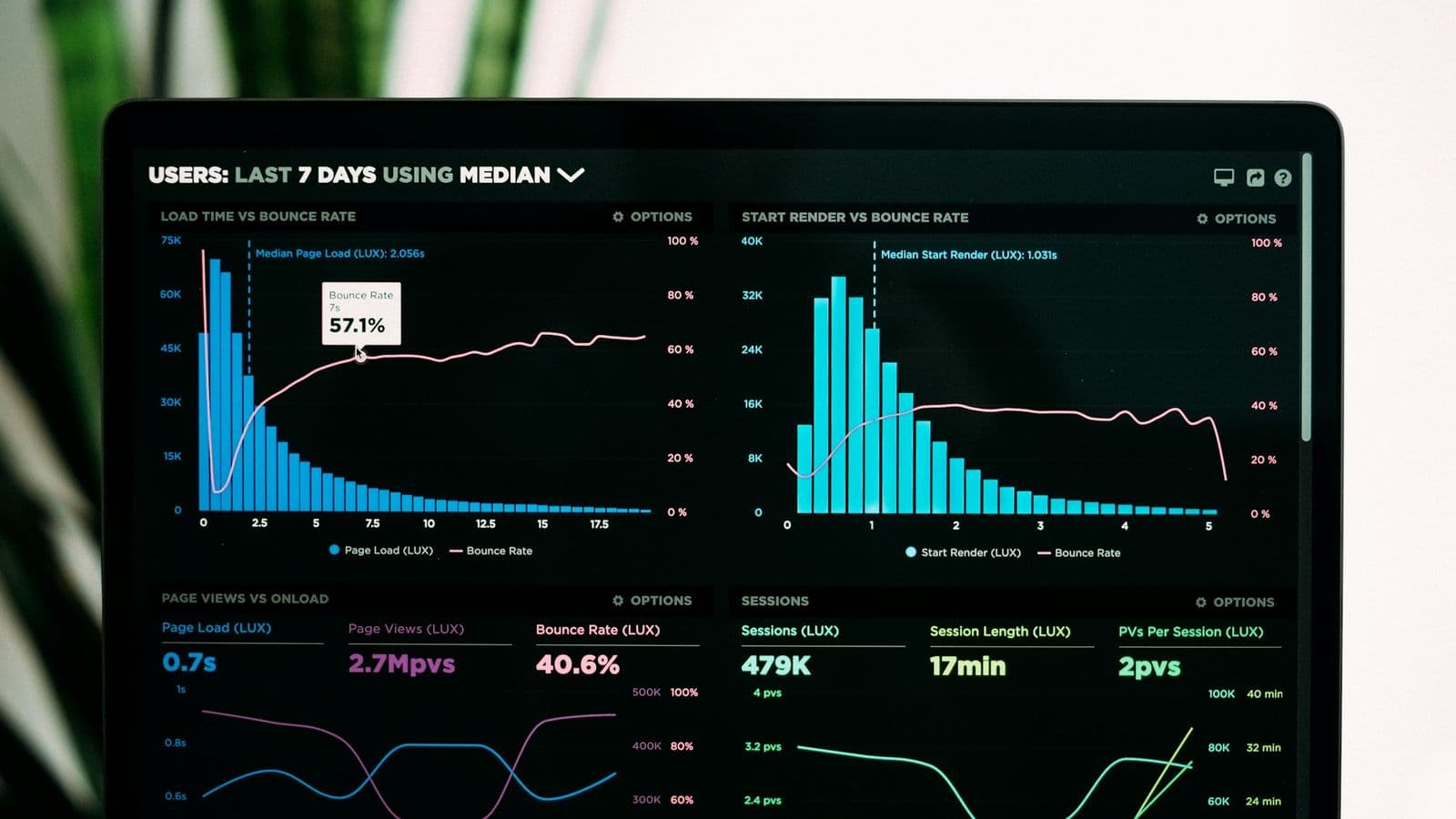 An analytics dashboard — in fintech the metrics that matter are business ones: success rate, settlement lag, reconciliation breaks, fraud rate
The India factor
If you're building for the Indian market, three realities should be visible in any proposal you're reading.
UPI is the default, not an option. Consumer payment behaviour here runs on UPI, and a product that treats it as a secondary rail is fighting the market. That brings NPCI's requirements, intent-versus-collect flows, and the reliability engineering of a rail with enormous volume.
Devices and networks are the real test environment. A large share of your users are on mid-range Android phones on variable mobile data. A fintech app that assumes a fast connection will fail exactly when a user is trying to pay for something at a counter. Offline tolerance, aggressive payload discipline, honest loading states and graceful retry behaviour are product requirements, not polish.
Language and trust are conversion features. Regional language support, plain-language disclosures, visible support contact and a real company address measurably change whether people complete onboarding with a financial product. Trust converts; cleverness doesn't.
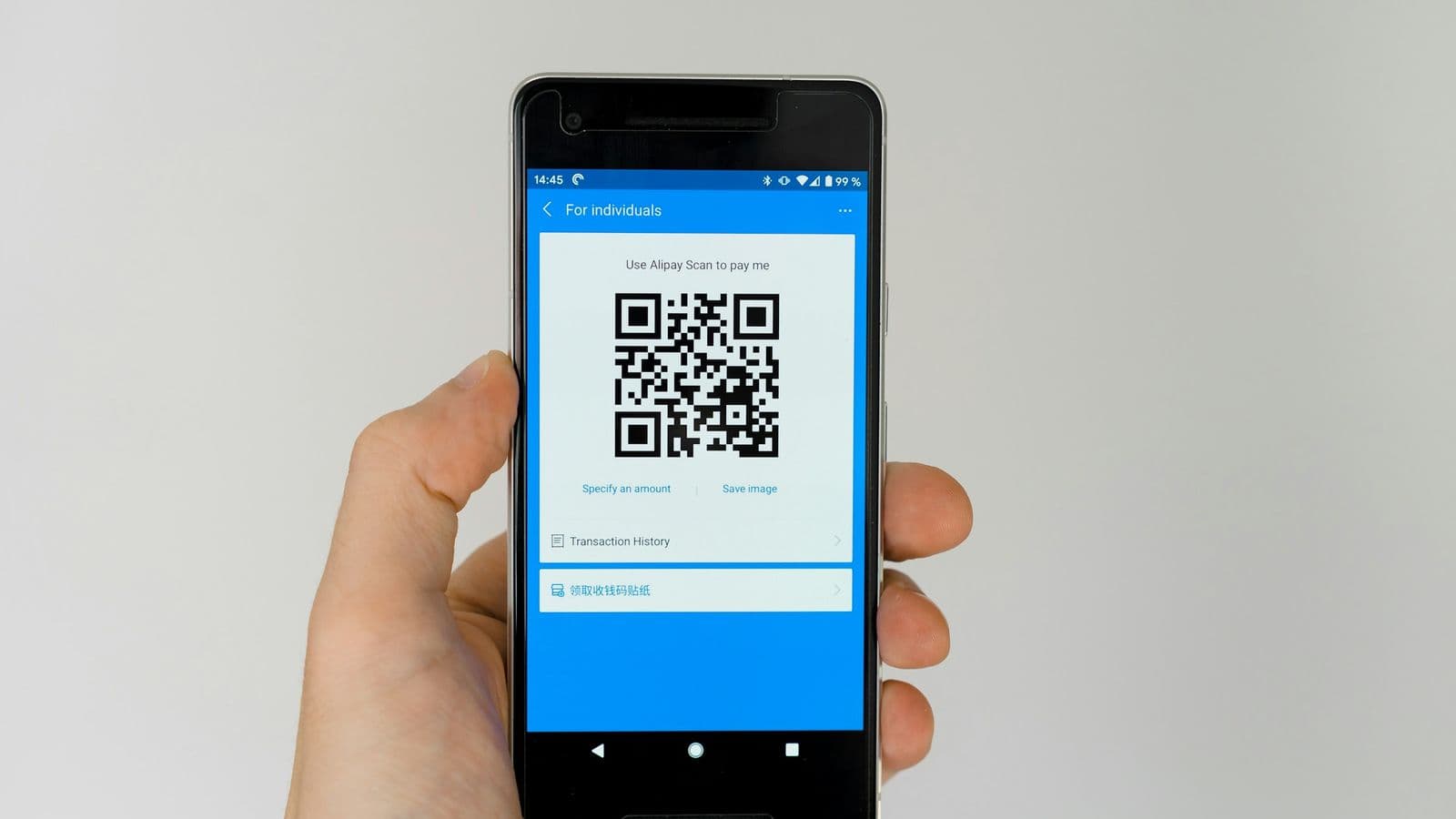 Scanning a QR code to pay — in India a fintech product that treats UPI as secondary is building against the market
How I work, and when I'm not the right fit
Let me be straight about this, because it's more useful than a pitch.
I'm one developer, not an agency — a deliberate structure, not a stage I'm hoping to grow out of. The person who scopes your project is the person who writes the code and the person who answers when something breaks at 9pm. There's no account manager relaying requirements to a developer who never spoke to you, and no junior quietly assigned to the ledger.
What that's very good for: B2B financial software, embedded finance inside an existing product, invoicing and GST systems, credit and khata ledgers, POS and billing platforms, loyalty and rewards engines, financial dashboards, reconciliation tooling, and multi-tenant SaaS where correctness and isolation matter. That's the work I've actually shipped — case studies here, portfolio here — and it's the work I'd take on tomorrow.
What I'll tell you to take elsewhere: if you're building a licensed neobank, a card issuer, or a high-frequency trading platform, you need a team with dedicated compliance staff and a 24/7 operations rota, and I'll say so in the first call rather than the fourth month.
For the work in between, being a hybrid — development, design and digital marketing under one roof — genuinely helps. Financial products live or die on trust, and trust is built by the interface, the words, the onboarding flow, the support experience and the marketing site all saying the same thing. When those are decided by one person in the same week rather than handed across four teams, the product is more coherent and you spend less.
Every build I ship includes, as standard rather than as upsells: a written architecture and data model before code; a double-entry ledger with immutable history; idempotent money endpoints; role-based internal tooling built alongside the product; encryption, key management and audit logging from the first commit; automated tests around the financial core; reproducible infrastructure; and full ownership of code, accounts and keys in your name from day one. You can see the full range on the services overview.
 Two people closing an agreement across a desk — the best predictor of a good fintech build is a single accountable person who understands both the money and the code
Frequently asked questions
What does a fintech app development company do? It builds the software that moves, stores, tracks and reports on money — the mobile or web application customers see, plus the ledger, payment integrations, KYC and onboarding, fraud controls, internal operations tooling, reconciliation and compliance engineering underneath it. The customer-facing app is roughly 30% of the effort; the financial back end and operational tooling are the rest. A company that only quotes for the app is quoting for a third of the job.
How much does it cost to build a fintech app in 2026?
A validation prototype runs ₹3–8 lakh ($3.5k–$10k). A production-grade MVP with a real ledger, one payment rail, KYC and a basic operations console runs ₹9–25 lakh ($11k–$30k) over 12–20 weeks. A full v1 with multiple rails, reconciliation, fraud controls and complete admin tooling runs ₹25–60 lakh (~$30k–$72k) over 6–10 months. Budget 15–25% of build cost annually thereafter. Quotes far below these ranges have removed something you will need.
How long does it take to build a fintech app? Twelve to twenty weeks to a credible MVP, and six to ten months to a hardened v1. The schedule is driven less by your development team than by partner integrations, sandbox-to-production certification and app store review, all of which move at someone else's pace. Treat any six-week payments-app promise as a prototype quote.
Do I need a licence to launch a fintech app? Usually not at the start. Most products launch on a regulated partner's rails — a licensed bank, payment aggregator, NBFC, PPI issuer or broker — and inherit the compliance perimeter from that relationship. Which partner you choose is the single biggest architectural decision in the project, so make it before you design. Confirm your specific position with a compliance counsel; this is a technical guide, not legal advice.
What should I look for when choosing a fintech app development company? Fluency in double-entry ledgers, idempotency and reconciliation; prior experience shipping software that handles money; regulatory questions asked before design questions; a data model and threat model produced as part of scoping; operations tooling explicitly in the quote; a named security posture; direct access to whoever writes the code; unconditional ownership of code and accounts; a written post-launch plan; and contactable references. Score the twelve points above and walk away from anything under eighteen.
Should I build a fintech app or a web platform first? For most B2B and embedded-finance products, a web platform first is the better economics: it's cheaper, it's discoverable in search, it doesn't require anyone to install anything, and a modern installable web app covers most of what a native app would do. Build native when you need push notifications at scale, offline operation, deep device security features, or genuine daily repeat use. The full comparison is in website versus mobile app.
What technology stack is best for a fintech app? Boring, typed and well-staffed beats novel. React Native or Flutter for cross-platform mobile, native when device security or performance demands it; Node.js/TypeScript, Go, Java or Laravel on the backend; PostgreSQL for anything holding balances, because ACID guarantees are the entire point; a dedicated append-only ledger schema or service; a real queue with retries and dead-letter handling; Next.js for dashboards and ops consoles; managed cloud in a compliant region with infrastructure as code. The best stack is the one your team can debug at 3am.
How do you keep a fintech app secure? Encryption in transit and at rest, managed key storage with rotation, tokenisation of sensitive instruments, short-lived tokens with MFA and step-up authentication on money movement, least-privilege role-based access on internal tools, immutable audit logs, rate limiting and replay protection, dependency scanning, independent penetration testing before launch and after major releases, and a written incident runbook. All of it is designed in from the first commit — retrofitting security to a live financial product is several times more expensive than building it in.
What is double-entry accounting and why does my app need it? Every movement of value is recorded as matching debits and credits so that all entries always sum to zero, and balances are derived from the entries rather than stored as a mutable number. It means the system can always explain any balance from first principles, that errors are detectable rather than silent, and that auditors, partners and acquirers can verify your books. Without it you have a number in a column and no way to prove it's right.
Can you add payments or financial features to my existing product? Yes — embedded finance is often the highest-return, lowest-risk option. Adding payments, invoicing, GST compliance, credit ledgers, subscriptions or spend management to a product that already has users typically runs ₹6–20 lakh over 8–16 weeks and avoids the cost and risk of a standalone build. It starts with an audit of your current architecture and data model to see what can be extended safely.
Do you work with clients outside India? Yes. A good part of my work is for clients elsewhere in India, the UK and beyond, and the process is identical — it runs over calls rather than across a desk. Being based in Srinagar means everything I build is designed for the connectivity and device realities we have here, which turns out to be a useful discipline anywhere.
How do I know whether my fintech product is working? Six numbers: onboarding completion rate, transaction success rate, settlement lag, reconciliation breaks per day, fraud and chargeback rate, and support tickets per thousand transactions. Server uptime is table stakes; these are the metrics that tell you whether the product is actually trustworthy. If your partner can't show you them monthly, either instrumentation was never built or the results aren't good.
The short version
The best fintech app development company for you is not the one with the slickest portfolio or the lowest quote. It's the one that:
- treats the ledger as the product and the app as the interface;
- asks about regulation before it asks about colour palettes;
- scopes operations tooling, reconciliation and security as line items rather than afterthoughts;
- can explain double-entry, idempotency and transaction states without preparing;
- says no to features that don't belong in version one;
- hands you unconditional ownership of code, accounts and keys;
- and is still accountable to you six months after launch, when the rules have changed and something needs fixing.
If a proposal in front of you covers those seven, you're in good hands whoever wrote it. If it doesn't, no amount of visual polish will make up the difference — and in financial software, the gap doesn't show up as a bad review. It shows up as money nobody can account for.
If you'd like a straight, specific answer for your own product rather than a general one — tell me what you're building, who it's for, and which rails you're planning to use — and I'll come back with the architecture I'd propose, what I'd deliberately leave out of version one, a phased estimate with the assumptions stated, and an honest view on whether I'm the right person to build it. If your money would be better spent embedding an existing provider than funding a custom build this year, I'll tell you that too.
Ready sooner? Request a quote with your requirements, see what I build and the systems behind it, or read how I approach financial and fintech products.
Owais Noor
Full-Stack Developer & Digital Marketer, based in Srinagar. I write about building fast, useful websites and software — and getting them found.